Alison Plott

Lessons in laughter

Each stroke of white makeup transforms a face. Rather than conceal, it reveals. The arch of a painted eyebrow, the exaggerated smile or frown, say more than a monologue. And the metamorphosis isn’t limited to the actor; it’s in the audience’s mind as well. Enter Eli Simon’s world, where clowning is an art. “Clowning is […]

Dr. Jae Chang

On the case with the blood detective

UCI hematologist Dr. Jae Chang employs medical sleuthing skills to identify rare blood disorders.

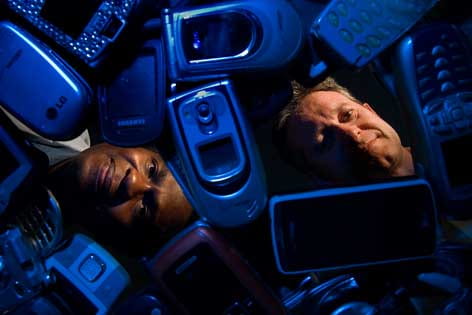
Oladele Ogunseitan and Jean-Daniel Saphores

Solving the e-waste dilemma

Electronic devices could create significant environmental and health problems after they are thrown away. UC Irvine researchers are working with engineers, manufacturers and public health officials to find solutions.

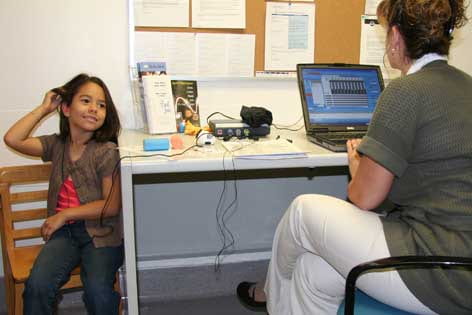
Ginger Stickney tests Ava Martin’s cochlear implant

UCI expands options for hearing-impaired

New technology in cochlear implants and hearing aids means children needn’t suffer from hearing loss, says UC Irvine Dr. Hamid Djalilian.

Courtney Amaya

Making history come alive

UCI History Project helps K-12 teachers improve lessons.

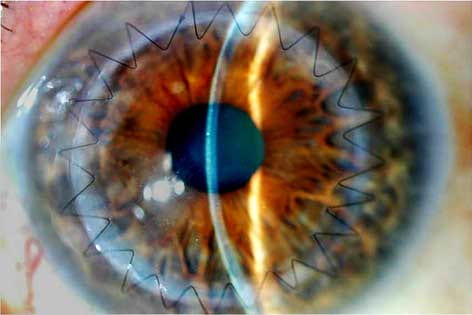
Eye undergoing a laser-assisted corneal transplant

A zigzag path to better vision

UCI ophthalmologists pioneer zigzag incision technique that improves outcome of laser-assisted corneal transplantation.

Alzheimer's lesions found in mice retinas

The eyes may be the windows to the soul, but new research indicates they also may mirror a brain ravaged…

UCI neuroscientist Zhiqun Tan

Alzheimer's lesions found in the retina

UC Irvine neuroscientists have found that retinas in mice genetically altered to have Alzheimer’s undergo changes similar to those that occur in the brain – most notably the accumulation of amyloid plaque lesions.

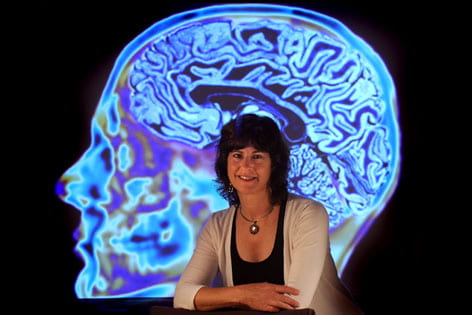
Leslie M. Thompson

Hope for Huntington's patients

Leslie M. Thompson has her eye on a treatment for the fatal Huntington’s disease. Stem cells may hold the key.

Alzheimer's retina

UC Irvine neuroscientists have found that retinas in mice genetically altered to have Alzheimer’s undergo changes similar to those that occur in the brain – most notably the accumulation of amyloid plaque lesions.